Free DESIGN | Send a Request >>>
Free DESIGN | Send a Request >>>

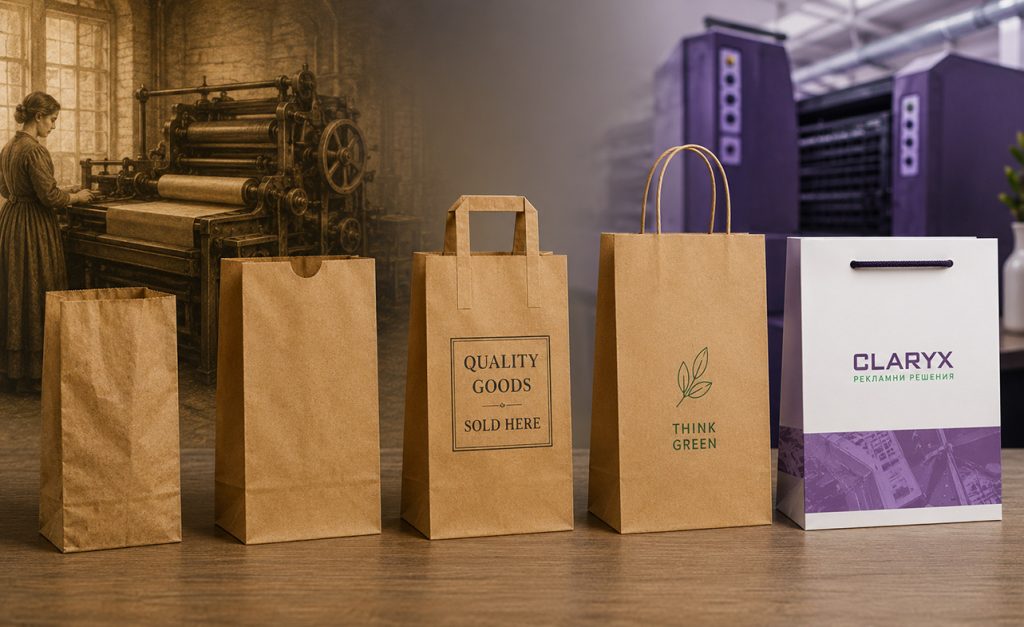
Paper bags manufacturing is an industry with a long history dating back to the 19th century. Today, paper bags are a natural part of the shopping experience. We see them in clothing stores, boutiques, bakeries, pharmacies, bookstores and restaurants, as well as at exhibitions, conferences and corporate events.
Beyond their practical role as packaging, paper bags have gradually evolved into an effective advertising medium. Adding a company logo, brand colors or a message can transform ordinary paper bags into an important part of a company’s visual identity.
Their history is a great example of how practicality, design and advertising can come together in a seemingly simple everyday product.
The development of paper bags in a form similar to what we know today began in the 19th century. As trade expanded, businesses needed faster and more convenient ways to package different types of goods.
In the 1850s, American inventor Francis Wolle patented a machine for manufacturing paper bags. This was an important step towards automating production and making paper bags more widely available to retailers.
Another major milestone came with Margaret Knight, who developed a machine for producing flat-bottomed paper bags in the second half of the 19th century. This design made paper bags considerably more practical: they could stand upright and made it easier to pack and carry different products.
Her invention became an important part of the development of modern paper bags. You can learn more about Margaret Knight and her invention from the National Inventors Hall of Fame.
As manufacturing technologies advanced, paper bags became increasingly accessible and gradually found their place in almost every area of retail.
Originally, paper bags served an entirely practical purpose – storing and carrying purchased products.
Over time, however, retailers realized something important: paper bags leave the store together with their customers.
They travel through streets, shopping centers, public transport and offices. A distinctive paper bag can therefore be seen by far more people than those who actually visited the store.
This naturally turned the available surface of paper bags into valuable advertising space.
Paper bags began to feature printed store names, and as printing technologies developed, the possibilities expanded to include logos, corporate colors, slogans, images and a wide variety of graphic elements.
In this way, ordinary packaging gradually evolved into promotional paper bags.
One of the main advantages of promotional paper bags is their ability to combine two functions: practicality and brand communication.
Customers receive convenient packaging for their purchases, while businesses gain additional visibility for their brands.
Imagine customers leaving a store carrying paper bags printed with a company logo. As they move around, the bags naturally attract the attention of other people. The advertising message therefore travels beyond the boundaries of the retail location and reaches a much wider audience.
When paper bags are attractive, well made and durable, they are also often reused. This extends the visibility of the advertising message well beyond the initial purchase.
This is what makes promotional paper bags an interesting marketing tool – the advertising itself also provides practical value to the person carrying it.
In modern retail, packaging is much more than a way to carry products. It contributes to the overall impression a company leaves on its customers.
That is why many details matter in the production of promotional paper bags – the type and weight of the paper, dimensions, construction, handles, colors, printing and overall graphic design.
Minimalist paper bags with a discreet logo, for example, can reinforce the premium positioning of a brand. Bright colors and bolder graphic designs can improve brand recognition, while custom paper bags created for events, conferences or promotional campaigns can become part of a broader advertising concept.
Good design is therefore about much more than simply placing a logo on an empty surface. Paper bags can become a natural extension of a company’s visual identity.
Modern customization options allow paper bags to be tailored to a specific advertising concept and brand identity.
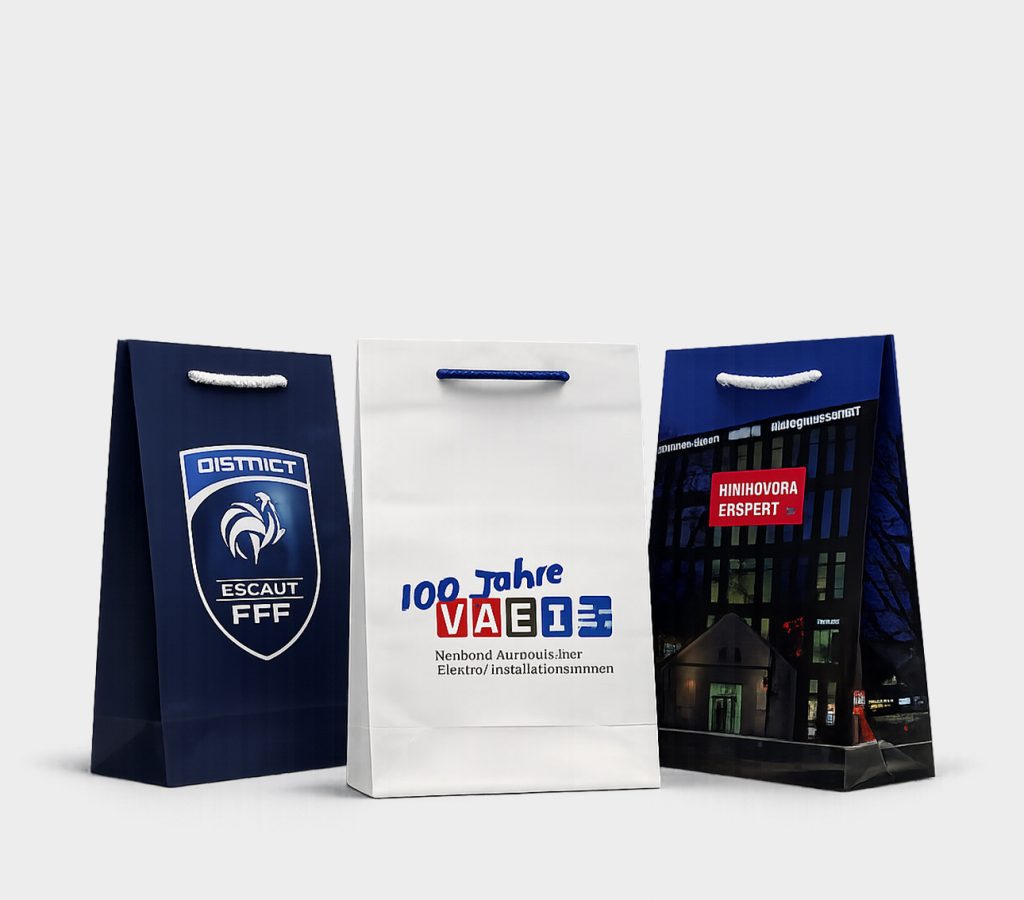
In addition to company logos, paper bags can feature slogans, advertising messages, website addresses, QR codes, contact details, images and other graphic elements.
This means that paper bags can serve many different purposes – from standard corporate packaging to an integral part of a specific advertising campaign.
For seasonal campaigns, for example, designs can be created around Christmas, Easter or other occasions. For exhibitions and conferences, paper bags can follow the visual identity of the event, while product launches and new store openings can feature specially designed promotional messages.
Promotional paper bags can be used by virtually any business that provides physical products, gifts or promotional materials to its customers.

They are particularly suitable for shops and boutiques, fashion and cosmetics brands, bakeries and confectioneries, bookstores, pharmacies, gift shops, restaurants, hotels, corporate events, conferences and exhibitions.
The dimensions and construction of promotional paper bags can be selected according to the products they are intended to carry, while their design can be tailored to the visual identity and specific objectives of the brand.
This makes promotional paper bags suitable for both small local businesses and large companies or international brands.
From the first machines used for paper bags manufacturing in the 19th century to today’s customized promotional packaging, paper bags have come a long way.

Their fundamental purpose, however, remains unchanged – paper bags need to be convenient, practical and suitable for the products they carry. Today, another important function has been added: advertising.
Well-designed paper bags can extend the interaction between customers and brands long after a purchase has been completed. They leave the store, travel to different places and expose the brand to new audiences.
That is why promotional paper bags are no longer simply packaging. They are part of product presentation, part of brand identity and, in a sense, small “walking billboards” that customers carry with them.
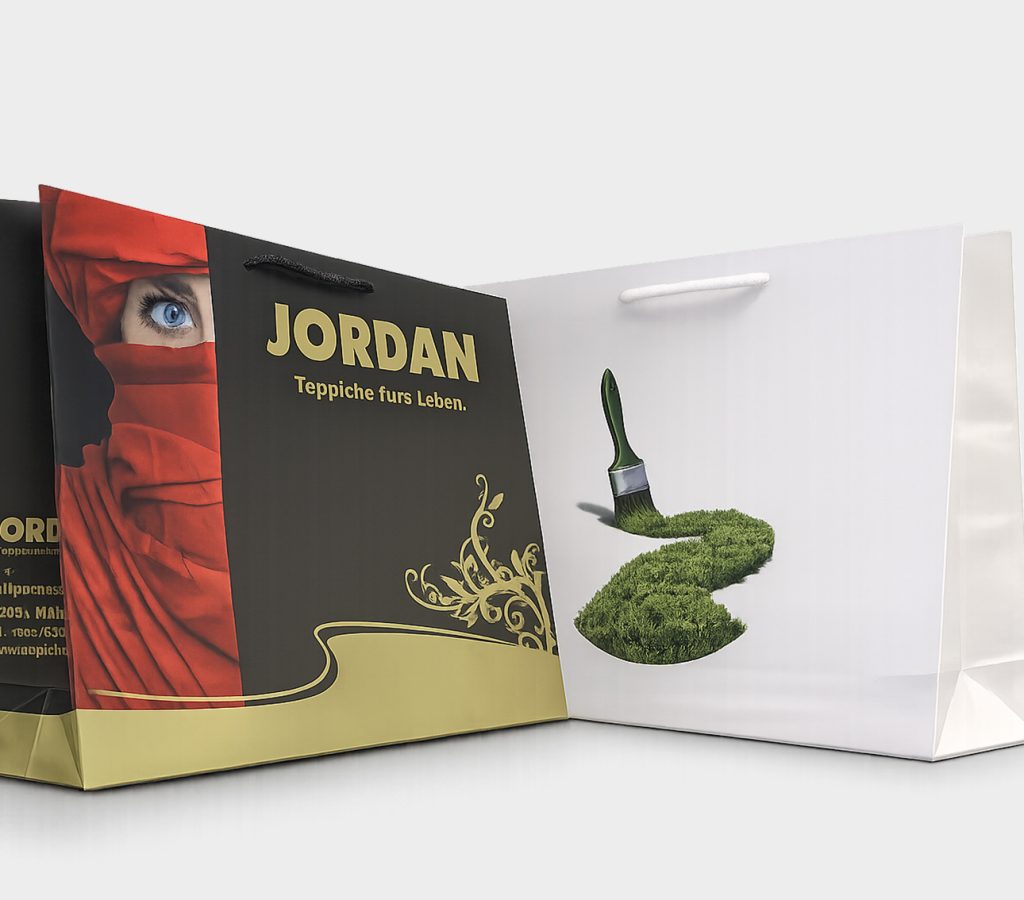
With over 30 years of experience in promotional paper bags manufacturing, Claryx works with companies from a wide range of industries, turning their ideas into custom-made packaging. From selecting the appropriate dimensions and paper to printing, handles and finishing effects, paper bags can be developed according to the specific requirements and corporate identity of each brand.
Have an idea for your promotional paper bags? Send us an inquiry for a personalized quotation or explore our gallery of completed projects and find inspiration for your own paper bags.